
The classroom has specialized supports to ensure students can learn effectively while staying in their own school community
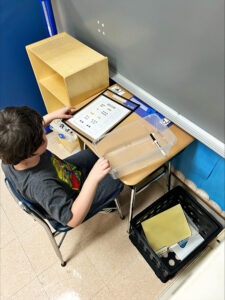
Two aides support students’ individualized instructional needs.
Cape May Court House, N.J. – Middle Township Public Schools began the school year with its first-ever autism classroom, marking a milestone in the district’s efforts to keep more students in MTPS schools.
New Jersey students with special needs receive instruction outside their district if local schools do not have the appropriate services. The district covers the costs of tuition and transportation for these students. MTPS leaders believed the new classroom was the best approach to help serve a growing number of district students classified with autism.
Dr. Pamela Shute, Assistant Superintendent of Student Services, said the autism classroom at Elementary #2 expands the district’s ability to provide an appropriate educational program within its own schools.
“The autism classroom is an important step in expanding the continuum of services available within the district,” said Shute. “It gives the district another option for meeting students’ individual needs while allowing eligible students to remain connected to their school, classmates, teachers, and broader community. Students can participate in specials, lunch, recess, school-wide activities, assemblies, events, and other shared experiences with their peers. At the same time, they still have access to the intensive, individualized instruction and support they need within the autism program.”
The classroom can serve up to six students and is designed specifically for learners’ educational, social and emotional needs. As of now, the classroom serves four students, who work with two aides.
The room at Elementary #2 is specifically equipped for the needs of the students, and features:
- Structured teaching. This includes having defined areas for independent work, one-to-one instruction, group instruction, breaks, and sensory regulation. Students have individualized visual schedules and work systems so they can understand what they are expected to do, how much work they have, and when they are finished.
- Communication support. Visual symbols and alternative communication devices are available throughout the classroom. The room also offers hands-on learning activities, and materials that allow instruction to be modified for individual students.
- A sensory room. Students have access to equipment and activities that provide movement, calming and sensory input based on their individual needs. The goal is to teach students how to self-regulate and return to learning.
- A focus on functional independence. Along with academics, students learn skills such as following a schedule, completing work independently, communicating wants and needs, grooming, hand washing, brushing teeth and hair, and other daily living skills.
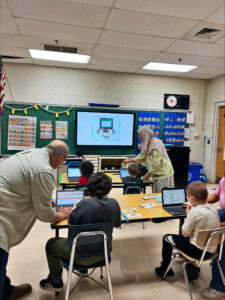
Students work with visual learning tools in the autism room at Middle Township Elementary School #2.
“The classroom also creates more opportunities to intentionally teach generalization,” said teacher Olivia Sims. “A student may learn communication, social, academic, or independence skills in the classroom and then practice that same skill in the hallway, cafeteria, playground, gym, library, or during school-wide activities.”
The autism classroom also reflects the commitment to student well-being and mental health that is outlined in the district’s strategic plan.
“Establishing an autism classroom reflects our mission of always acting in the best interest of students,” said Stephanie DeRose, Superintendent of Schools. “Now, more students can have the tools they need in their own schools while benefiting from the support and comfort of their school community.”